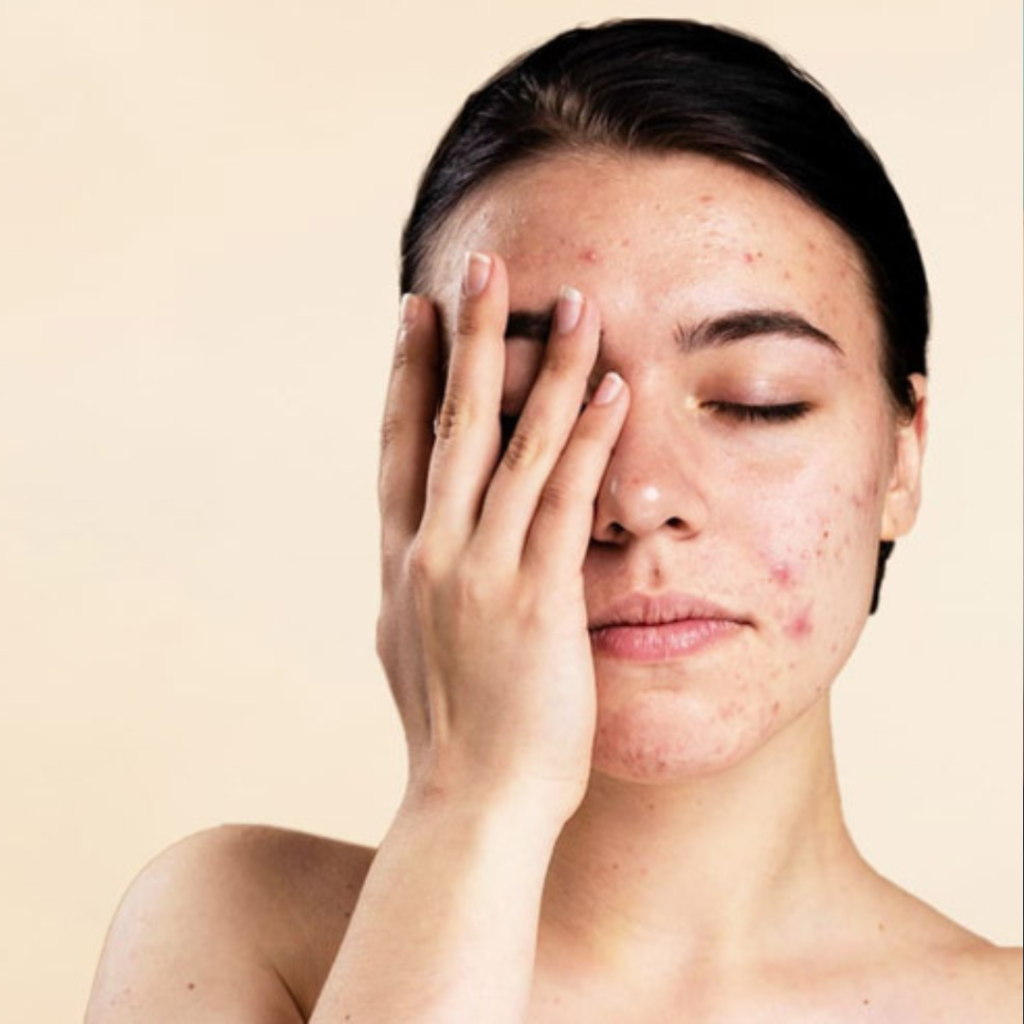
🌫️ NCR #1 Pollution-triggered skin issues in India
✨ Free First consultation at Renaissance Clinic
A single pimple before an important meeting. Dark spots that refuse to fade. Skin that feels constantly irritated, rough, or uneven. If you live in Indirapuram, Indrapuram, Vaishali, or anywhere in Ghaziabad, you know these skin struggles intimately — and you’re far from alone.
Acne is the most common skin condition in the world, affecting people of all ages, genders, and skin types. In North India — and particularly in NCR cities like Ghaziabad — it is driven by a powerful combination of genetics, hormones, pollution, hard water, and stress that makes skin care both more challenging and more important than ever.
The good news is that in 2026, acne and its aftermath — pigmentation, blemishes, skin irritation, and post-acne marks — are all highly treatable with the right clinical approach. At Renaissance Clinic, located at Jaipuria Mall, Ahinsa Khand 2, Indirapuram, Ghaziabad, our dermatologists have helped thousands of patients across the NCR achieve genuinely clear, healthy skin.
This guide covers everything: the types of acne, why Ghaziabad’s environment makes skin problems worse, every treatment option available, and how to choose the right one for your skin.
Understanding Acne & Pimples — What Is Actually Happening in Your Skin?
Most people think acne is about being dirty or eating the wrong foods. The reality is far more complex — and understanding it is the first step to treating it effectively.
The Biology of a Pimple Acne begins inside the hair follicle (pore). Your skin constantly produces sebum — a natural oil that lubricates and protects. When excess sebum combines with dead skin cells, it blocks the pore. Bacteria (primarily Cutibacterium acnes) colonise the blocked follicle. The immune system responds with inflammation. The result: a pimple, cyst, or blackhead. Four key factors drive this process — and understanding which ones apply to you determines your treatment: Excess sebum production — often driven by androgens (male hormones present in both sexes)Abnormal skin cell shedding — cells that should shed regularly instead stick inside the poreBacterial colonisation — C. acnes bacteria proliferate in the blocked, oxygen-poor follicleInflammation — the immune response that creates redness, swelling, pain, and eventual scarring
Types of Acne — Identifying What Your Skin Has
Not all pimples are the same — and the treatment that works for one type may be useless or even harmful for another. Here is what each type looks like and what it means:
⚫
Blackheads (Open Comedones) A blackhead forms when a pore is clogged but remains open at the surface. The dark colour is NOT dirt — it is oxidised melanin (the skin’s pigment) reacting with air. Blackheads are non-inflamed and non-painful. Signs: Dark, small dots — usually on nose, chin, and forehead. No redness or swelling around them.
⚪
Whiteheads (Closed Comedones) A whitehead forms when the pore is clogged and closed at the surface, trapping sebum and dead skin cells. The white or flesh-coloured bump is the trapped contents beneath a thin layer of skin. Whiteheads are also non-inflamed. Signs: Small, white or skin-coloured bumps. No redness. May feel slightly raised under fingertip.
🔴
Papules — Inflamed Pimples When a closed comedone becomes infected with bacteria, the immune system responds with inflammation, creating a papule. Papules are the classic ‘red pimple’ — small, solid, raised bumps with no visible pus. They are tender to touch and should never be squeezed. Signs: Small red/pink raised bumps. Tender when pressed. No white or yellow centre.
💛
Pustules — Pus-Filled Pimples Pustules are similar to papules but have a visible white or yellow centre of pus — which is a collection of dead skin cells, bacteria, and white blood cells. These are what most people picture when they think of a pimple. Squeezing them pushes infection deeper and dramatically increases scarring risk. Signs: Red base with a white or yellow pus-filled centre. More painful than papules.
🟠
Nodules — Deep, Painful Lumps Nodules develop when the infection goes deeper into the skin, creating a large, hard, painful lump. Unlike pustules, nodules do not have a visible centre — the infection is too deep. Nodular acne is severe and always requires prescription medical treatment — never attempt to squeeze or pop. Signs: Large, hard, skin-coloured or red lumps. Deep under the skin surface. Painful to touch. Persist for weeks.
🔵
Cystic Acne — The Most Severe Form Cystic acne is the most severe and most likely to cause permanent scarring. Cysts are large, inflamed, pus-filled lesions deep in the skin. They feel like fluid-filled sacs under the skin. Cystic acne requires immediate dermatological treatment — isotretinoin (Accutane) or oral antibiotics plus topical treatments are typically needed. Home remedies are completely ineffective for cystic acne. Signs: Large, soft, painful. Feel fluid-filled. Often 1cm or larger. Leave significant scarring if untreated.
🪷
Hormonal Acne Hormonal acne is driven by fluctuations in androgens, oestrogen, and progesterone. In women, it typically appears along the jawline, chin, and lower cheeks — often flaring cyclically around menstruation. In men, it manifests more as back and chest acne. Hormonal acne is particularly common in PCOS, thyroid disorders, and during puberty. It requires a hormone-informed treatment approach. Signs: Jawline, chin, lower face in women. Back and chest in men. Cyclical flaring pattern.
Beyond Acne — Common Skin Issues We Treat at Renaissance Clinic
Acne rarely travels alone. Most patients who come to us also deal with one or more of these related skin concerns:
🎭
Pigmentation & Dark Spots Post-inflammatory hyperpigmentation (PIH) — dark spots left behind after acne heals. Made worse by sun exposure. Extremely common in Indian skin (Fitzpatrick IV-VI).
Treatment at Renaissance: Chemical peels, Laser toning, Kojic acid formulations, Vitamin C serums, SPF protocol
🌑
Skin Blemishes & Acne Marks Flat, discoloured marks (red or brown) where acne once was. Unlike scars, blemishes are not raised or indented — but they persist for months without treatment.
Treatment at Renaissance: Topical retinoids, Azelaic acid, Chemical peels, Microneedling with serums
😤
Skin Irritation & Sensitivity Redness, burning, itching, or tightness — often triggered by pollution, hard water, wrong skincare products, or seborrhoeic dermatitis. Very common in Ghaziabad’s NCR environment.
Acne Scars Permanent textural changes left by severe acne. Types: Ice pick scars (deep, narrow), Boxcar scars (broad, defined edges), Rolling scars (wavy texture), Hypertrophic scars (raised). Scars require active treatment — they do not self-resolve.
Treatment at Renaissance: Microneedling (RF), Fractional CO2 laser, Subcision, Chemical peels, Dermal fillers
🟤
Open Pores & Oily Skin Enlarged, visible pores — particularly on nose, cheeks and chin. Often accompanied by excessive oiliness and recurrent blackheads. Common in Ghaziabad’s hot, humid summers.
Uneven Skin Tone & Dullness Lacklustre, uneven complexion — often caused by pollution damage, UV exposure, dehydration, and accumulated dead skin cells. Very common in NCR urban populations.
Treatment at Renaissance: Brightening chemical peels, Vitamin C infusion facials, Microdermabrasion, Antioxidant serums
Why Skin Problems Are Especially Common in Ghaziabad & Indirapuram
If you feel like your skin has gotten worse since moving to or growing up in the Ghaziabad area, you are not imagining it. Our dermatology team at Renaissance Clinic sees this pattern every day — and the reasons are well-documented:
Pollution — The #1 Skin Aggravator in NCR Ghaziabad consistently ranks among India’s most polluted cities. Fine particulate matter (PM2.5) — the microscopic pollutants that penetrate deep into pores — deposits on the face throughout the day. These particles contain heavy metals, free radicals, and polycyclic aromatic hydrocarbons that: clog pores and aggravate existing acne, trigger oxidative stress that breaks down collagen, cause chronic low-grade inflammation that worsens every skin condition, and create the characteristic ‘pollution-induced dull skin’ we see ubiquitously in our Indrapuram patients. Hard Water — The Hidden Skin Destroyer Ghaziabad’s municipal water supply is classified as hard water — high in calcium and magnesium ions. Washing your face with hard water: leaves a mineral film on the skin that clogs pores, disrupts the skin’s natural slightly-acidic pH barrier (making it more vulnerable to bacteria), causes chronic skin irritation and redness, and makes cleanser more difficult to rinse off completely — leaving a residue that congests pores. Using micellar water or a pH-balanced toner after washing can significantly mitigate hard water’s effects. Extreme Heat, Humidity & Seasonal Sweat Ghaziabad’s summer temperatures regularly exceed 42°C with high humidity levels. This combination causes excessive sweating, increases oil production, and creates a warm, moist environment on the skin surface that is ideal for bacterial proliferation. May through July see a dramatic increase in acne flare-ups among our patients. Urban Stress & Lifestyle Long commutes from Indirapuram to Delhi or Noida, high-pressure work environments, disrupted sleep, and stress-eating patterns all elevate cortisol — which directly stimulates sebum production and worsens acne. This is why so many of our patients in the 22–35 age group experience adult acne despite having clear skin in their teens. Wrong Skincare Products for Indian Skin Many popular skincare products available in Indian markets — and widely recommended on social media — are formulated for lighter Caucasian skin types. Indian skin (Fitzpatrick III-VI) is more prone to post-inflammatory hyperpigmentation, more sensitive to certain actives, and has different sebum characteristics. Using the wrong product can trigger breakouts, create skin irritation, and worsen pigmentation. At Renaissance Clinic, every patient receives a skincare routine personalised to their specific skin type, tone, and concerns.
Best Acne & Skin Treatments at Renaissance Clinic, Indirapuram
Effective acne treatment in 2026 is never one-size-fits-all. At Renaissance Clinic, our dermatologist creates a layered treatment plan based on your acne type, severity, skin tone, and lifestyle. Here is every treatment modality we offer:
💊 01
Medical Therapy — Topicals & Oral Medications FIRST-LINE TREATMENT Topical retinoids (Tretinoin, Adapalene): unclogs pores, speeds cell turnover, reduces comedones. The cornerstone of most acne treatment plansTopical antibiotics (Clindamycin, Erythromycin): reduce C. acnes bacteria on skin surface — always combined with benzoyl peroxide to prevent resistanceBenzoyl peroxide: kills bacteria and reduces comedones — available OTC but most effective at prescription strength and concentrationAzelaic acid: treats both acne and pigmentation simultaneously — ideal for Indian skin prone to PIHOral antibiotics (Doxycycline, Minocycline): for moderate-severe inflammatory acne — short-term courses (8-12 weeks) prescribedOral isotretinoin (Roaccutane): the most powerful acne treatment available — transforms even severe cystic acne. Requires monthly monitoring by a dermatologistHormonal therapy for women: spironolactone, OCP — addresses the hormonal root cause of jawline and chin acne Best for: Mild to severe acne — medical therapy is the foundation of every treatment plan at Renaissance Clinic
🧴 02
Chemical Peels for Acne & Pigmentation HIGH-IMPACT IN-CLINIC Salicylic acid peel (BHA): oil-soluble — penetrates into the pore to dissolve sebum and dead skin cells. The gold standard peel for oily, acne-prone skinGlycolic acid peel (AHA): resurfaces the skin surface, reduces post-acne marks, and brightens dull complexionMandelic acid peel: gentler than glycolic, ideal for sensitive or darker Indian skin — reduces acne and pigmentation with lower irritation riskTCA peel (medium-depth): addresses post-acne scars, deep pigmentation, and skin texture issuesCombination peels: our dermatologists often combine actives for targeted, multi-benefit peelsSessions: typically 4-6 peels spaced 2-4 weeks apart for acne. Downtime: minimal to 2-3 days depending on depth Best for: Acne-prone skin with comedones, active pimples, pigmentation, skin blemishes, and dull skin — all skin types at Renaissance Clinic
✨ 03
Laser Treatments for Acne & Scars ADVANCED TECHNOLOGY Q-switched Nd:YAG laser (laser toning): reduces acne-causing bacteria, shrinks oil glands, fades pigmentation and blemishes — virtually no downtime. Popular for active acne managementFractional CO2 laser: the most effective treatment for acne scars — creates precise micro-channels that trigger collagen remodelling, smoothing ice pick, boxcar, and rolling scarsRadiofrequency microneedling: combines microneedling with RF energy for superior scar remodelling. Less downtime than CO2 laser. Excellent for Indian skin as it carries lower risk of post-treatment hyperpigmentationLaser pore reduction: targets enlarged pores specifically, tightening and shrinking themResults from laser treatments are visible from session 1-2, with significant improvement after 3-6 sessions Best for: Post-acne scars, active acne (Q-switched laser), pigmentation, enlarged pores, uneven skin texture
💉 04
Microneedling & Collagen Induction Therapy SCAR REMODELLING Microneedling uses a device with fine needles to create controlled micro-injuries in the skin — triggering the body’s natural wound-healing cascade and producing new collagenParticularly effective for rolling and boxcar acne scars, skin texture improvement, open pores, and skin rejuvenationOften combined with PRP (Platelet-Rich Plasma) or growth factor serums delivered into the micro-channels for enhanced results4-6 sessions spaced 4-6 weeks apart are typical for acne scar treatmentLower risk of post-inflammatory hyperpigmentation compared to ablative laser — making it especially suitable for darker Indian skin tones in Ghaziabad Best for: Acne scars (rolling, boxcar), large pores, skin texture issues, skin rejuvenation in patients seeking natural-looking improvement
🌿 05
Medical-Grade Facials & Skin Treatments MAINTENANCE & SUPPORT HydraFacial or equivalent deep cleansing facial: removes dead skin, unclogs pores, hydrates — excellent for maintenance between clinical treatmentsLED light therapy: blue light kills C. acnes bacteria; red light reduces inflammation and supports healing — painless, no downtimeCarbon laser facial (Hollywood peel): carbon lotion applied to skin, then vaporised with laser — deep-cleans pores, reduces oiliness, brightens skin immediatelyComedone extraction: professional extraction of blackheads and whiteheads by a trained therapist — far safer than home squeezingCustomised medical-grade facials incorporating actives (vitamin C, niacinamide, hyaluronic acid) based on your skin assessment Best for: Maintenance, mild congestion, skin brightness, overall skin health — suitable for all patients including those without active acne
📋 06
Personalised Prescription Skincare Routine HOME CARE FOUNDATION A dermatologist-prescribed home care routine is not optional — it is the foundation that makes every clinic treatment work better and last longerYour prescription skincare plan includes: a pH-balanced, non-comedogenic cleanser specific to your skin type; a targeted treatment layer (retinoid, BPO, or azelaic acid); a lightweight, oil-free moisturiser that repairs the skin barrier without blocking pores; a daily SPF 30-50 (non-negotiable for acne skin — sun exposure darkens every mark and scar)Our dermatologists at Renaissance Clinic prescribe specific products at each consultation — not generic advice, but a written routine with product names, concentrations, and timingWe also guide patients on what NOT to use — many popular Indian skincare trends (over-layering actives, high-concentration vitamin C too early, certain face oils) can worsen acne and irritation Best for: Every patient — prescription skincare is included as part of every acne treatment plan at Renaissance Clinic
Acne Do’s and Don’ts — The Honest Guide for Ghaziabad Patients
DO — Your Skin Will Thank You
DON’T — These Make Acne Worse
Cleanse twice daily — no more, no lessApply SPF 30+ sunscreen every single morningUse only non-comedogenic (pore-safe) moisturisersWash pillowcases every 3-4 daysClean your phone screen daily — it transfers bacteria to your cheek and jawStay hydrated — 2.5-3 litres of water dailySee a dermatologist if pimples persist beyond 8 weeks of consistent careUse a micellar water to remove hard water residue after face washingTie hair back — hair products and oils transfer to the foreheadRemove makeup before sleeping — every single night
Never pop, squeeze, or pick pimples — this causes scarringDo not over-wash — more than twice daily strips skin barrierAvoid applying toothpaste, lemon juice, or home remedies on pimplesNever use scrubs on active inflamed acne — causes micro-tearsDo not layer multiple actives without dermatologist guidanceAvoid oil-based or comedogenic sunscreens and moisturisersDo not stop treatment as soon as skin clears — acne recurs without maintenanceAvoid wearing heavy makeup that blocks pores during breakoutsDo not try treatments from social media without consulting a dermatologistNever share face towels or makeup brushes
About Renaissance Clinic — Skin & Acne Treatment Specialists, Indirapuram
Skin You’re Confident In. Results You Can See.Jaipuria Mall, Ahinsa Khand 2, Indirapuram, Ghaziabad – 201014renaissanceclinicindia.com Our Dermatology specialists — every diagnosis and prescription by a qualified dermatologistComplete acne treatment spectrum: topicals, oral medication, chemical peels, laser, microneedlingPersonalised skincare routine prescribed at every consultationSpecial expertise in Indian skin (Fitzpatrick III-VI) — critical for pigmentation and scar treatmentUS-FDA approved technology including Q-switched Nd:YAG and fractional laser systemsTransparent pricing — no hidden charges. Flexible EMI payment options availableServing Indirapuram, Indrapuram, Vaishali, Vasundhara, Crossing Republik, Noida, East Delhi
Locality / Area
Travel Time to Renaissance Clinic
Ahinsa Khand 1 & 2, Indirapuram
Walking distance / 2 min
Vaishali, Ghaziabad
10–15 min via NH-9
Vasundhara
12–18 min
Crossing Republik
15–20 min
Noida Sector 62 & 63
20 min
Mayur Vihar / Patparganj, Delhi
25–30 min
Frequently Asked Questions — Acne & Skin Treatment in Ghaziabad
Q: How long does acne treatment take to show results? A: Realistic timelines: topical treatments (retinoids, BPO) take 8-12 weeks to show meaningful improvement — many patients see initial changes at 4-6 weeks. Chemical peels show results progressively with each session. Oral antibiotics improve active acne within 4-8 weeks. Isotretinoin delivers significant clearing within 2-3 months with full results at 4-6 months. Laser treatments for scars show improvement from session 1, with full collagen remodelling over 3-6 months. The most common mistake patients make is stopping treatment too soon. At Renaissance Clinic, we set clear timeline expectations at your first consultation.
Q: Can acne scars be completely removed? A: Complete removal depends on scar type and depth. Pigmentation-type marks (flat dark spots after acne) can be dramatically improved or completely faded with chemical peels, laser toning, and the right topical routine. Textural scars (ice pick, boxcar, rolling) can be significantly improved — typically 50-70% improvement with a full treatment course of microneedling or fractional laser — but very deep or long-standing scars may not fully resolve. Our dermatologist will give you an honest assessment of what is achievable for your specific scars at consultation.
Q: What causes acne specifically in Ghaziabad and the NCR region? A: In our clinical experience treating patients from Indirapuram, Vaishali, Vasundhara, and Crossing Republik, the primary aggravating factors for acne in this region are: air pollution (PM2.5 deposits on skin), hard water disrupting the skin’s pH barrier, extreme summer heat and sweating, hormonal triggers common in the young urban demographic, and the stress of urban NCR life. Many of our patients find that addressing these environmental factors — alongside medical treatment — significantly accelerates their results.
Q: Is acne treatment safe for Indian skin? A: Absolutely — when prescribed by a qualified dermatologist who understands Indian skin. Indian skin types (Fitzpatrick III-VI) are more prone to post-inflammatory hyperpigmentation (PIH), meaning some aggressive treatments used in Western dermatology practice can cause darkening rather than clearing. At Renaissance Clinic, all our protocols are specifically calibrated for Indian skin — including choice of chemical peel depth, laser settings, and retinoid concentrations. This expertise is why patients from across NCR choose us for their skin treatment.
Q: What is the cost of acne treatment in Ghaziabad? A: Costs vary depending on the treatment type and the number of sessions required. A detailed estimate is provided at your consultation. As a guide: medical consultation with prescription (Rs. 500-1,000), chemical peel sessions (Rs. 1,500-4,000 per session), laser treatments (Rs. 3,000-8,000 per session), microneedling (Rs. 3,500-7,000 per session), isotretinoin course with monitoring (Rs. 1,500-3,500/month). We believe in complete cost transparency — no hidden charges at any stage of treatment. EMI options are available for multi-session packages.
Q: I have tried everything — creams, home remedies, nothing works. Can a dermatologist help? A: Yes — and this is exactly the patient profile we most commonly see. The reason previous treatments have not worked is almost always because the underlying cause was not correctly identified. Acne driven by hormonal imbalance will not respond to topical antibiotics. Nodular or cystic acne will not respond to over-the-counter benzoyl peroxide. Acne compounded by Ghaziabad’s hard water won’t clear up without addressing the environmental factor. At Renaissance Clinic, our dermatologist takes a comprehensive diagnostic approach — looking at blood work, lifestyle, skincare routine, and skin assessment — before prescribing. Our success with previously-treated, treatment-resistant acne is consistently high.
Start Your Journey to Clear Skin Today. Every pimple you leave untreated is a potential scar. Every week of delay means more pigmentation to reverse. The best time to see a dermatologist about your skin was yesterday. The second best time is today. Jaipuria Mall, Ahinsa Khand 2, Indirapuram, Ghaziabad – 201014Book Skin Consultation at renaissanceclinicindia.comServing Indirapuram · Vaishali · Vasundhara · Crossing Republik · Noida · East Delhi